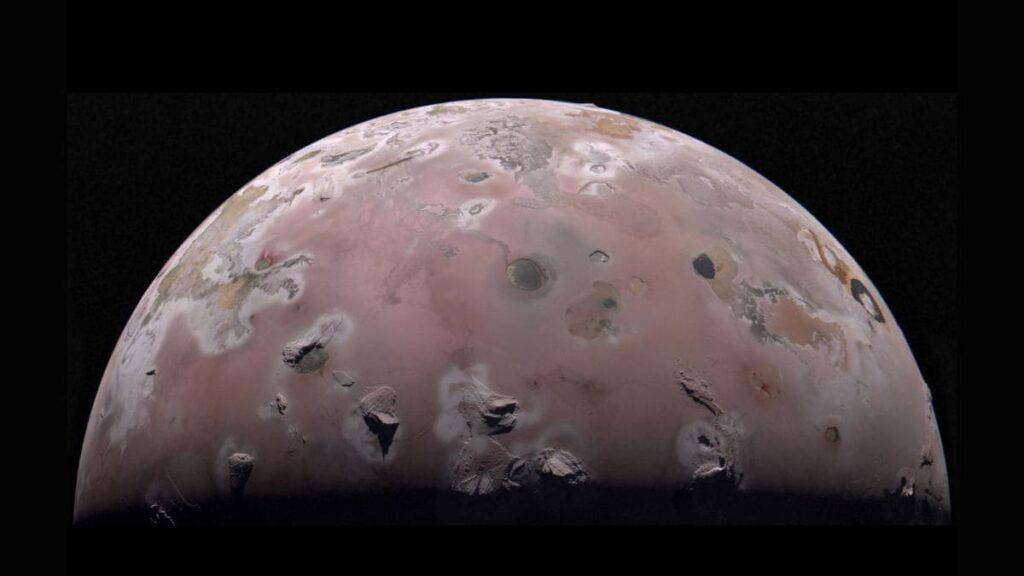

Nasa’s Juno Spacecraft, in Orbit Around Jupiter, Had a HUGE Problem when Its Junocam Imager started Designed to only last through the initial few orbits, JunoCam astonishingly endured 34 orbits. Yet by the 47th orbit, the effects of radiation damage were visible, and by the 56th orbit, images were almost illegible. With few alternatives and time slipping away before a close flyby of Jupiter’s volcanic moon Io, engineers made a daring but creative gamble. Employing an annealing process, they sought to resuscitate the image by warming it up—an AAN experiment that proved successful.
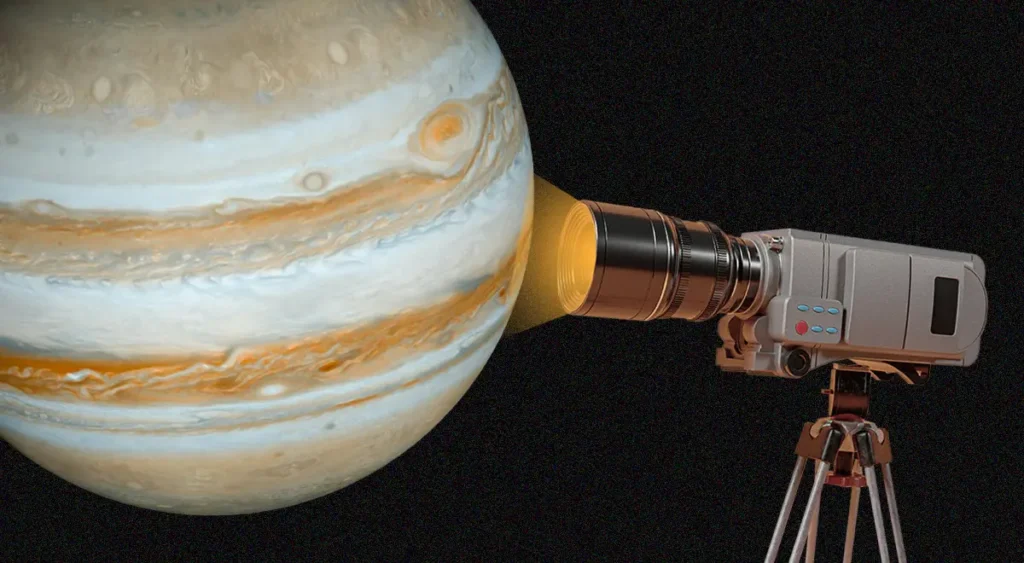
Table of Contents
Long-distance fix
According to NASA, JunoCam’s camera resides outside the spacecraft’s radiation-shielded interior and is extremely vulnerable. After several orbits, it started developing damage thought to be caused by a failing voltage regulator. From a distance of hundreds of millions of miles, the mission team implemented a last-ditch repair: annealing. The technique, which subjects materials to heat in order to heal microscopic defects, is poorly understood but has been successful in the lab. By heating the camera to 77°F, scientists wished to reorient its silicon-spoiled parts.
At first, efforts were for naught, but only days before the December 2023 flyby of iO, the camera unexpectedly recovered—recovered—retaining close-to-original image quality. Just in time to photograph previously unseen volcanic landscapes.
Radiation Lessons for the future
Though the camera showed renewed degradation during Juno’s 74th orbit, the successful restoration has led to broader applications. The team has applied similar annealing strategies to other Juno instruments, helping them withstand harsh conditions longer. Juno’s findings are now informing spacecraft design across the board. “We’re learning how to build radiation-tolerant systems that benefit Bot Defense and commercial satellites,” said Juno’s principal investigator, Scott Bolton. These findings would inform future missions, such as those who visit the outer planets or work in high-radiation environments near Earth, in the Van Allen belts. Juno’s mission continues to pay dividends with unexpected innovations—a lesson in how a small amount of heat can do wonders.