
A potential new solar salar sail-powered satellite mission is offering an extended early warning of extra To fail mid-activity and then figure out where. Going far beyond Earth in the traditional sense of this type of satellite, the Solar SAIL SAL SPACECRAFT WOULD PROVIDE Almost 20 More Minutes of Warning Time (Up to About 60 Minutes Total) for Geomagnetic Storms. These eruptions, called coronal mass ejections, cause space weather events that can disrupt satellites, damage power grids, and expose astronauts to cosmic radiation through high-altitude commercial flights. The better the predictions, the more time for critical systems to respond, so overall it is supposed to work out.
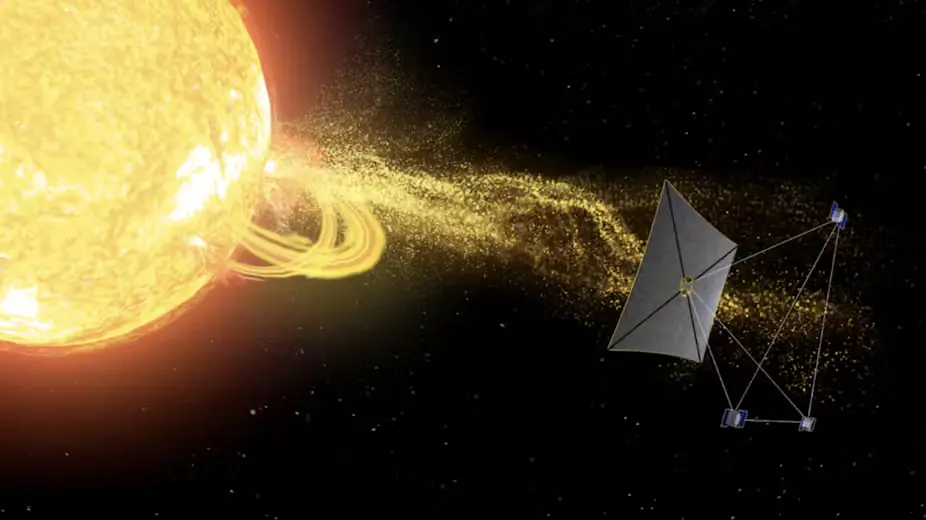
Table of Contents
Solar Sail Mission Swift Aims to Boost Space Weather Forecasting from Beyond L1 Point
According to a report published by The Conversation and contributed to space.com, the new Swift (Space Weather Investigation Frontier) mission will put a satellite with a lightweight solar sail out at 2.1 million kilometers from Earth, which is farther than the existing L1 Lagrange point where solar wind is monitored now. That might mean a longer warning—”lead “time,” in space weather speak—which would give six satellite operators more time to shield their satellites, preventing them from pre-eating extra Allow Airlines to Chart the Safest Ways for Planes.
The new solar spacecraft, Solar Cruiser, stays in orbit by a balance created from the sun’s gravity and solar photons bounced off a reflective sail. Far larger than previous sail missions like NanoSail-D2 and JAXA’s IKAROS. This steps the satellite post-launch.
Solar Cruiser, part of the Swift Constellation, will measure solar wind at several vantage points for better interplanetary space weather forecasting. Enquire for more economical on-ground space weather forecasts and missions such as Swift that help protect our planet from imploding due to solar emissions.