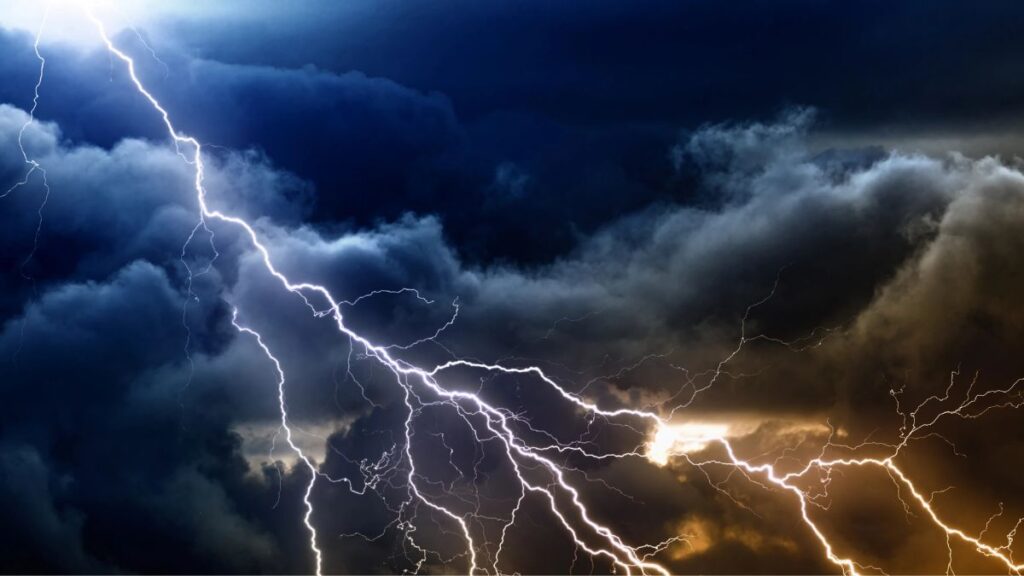

Back in the year 2017, when a thunderstorm exhibited a lightning bolt, it was astonishing in many ways. Not only was it surprising, but it was a bolt that went 515 miles (829 kilometers) long. In recent scientific advancements, researchers have confirmed the length of the bolt using archival satellite data. The lightning stretched and traveled from Texas to Missouri. This lightning has finally made a world record by beating the previous record holder, which was a bolt that went 477 miles in the year 2020.
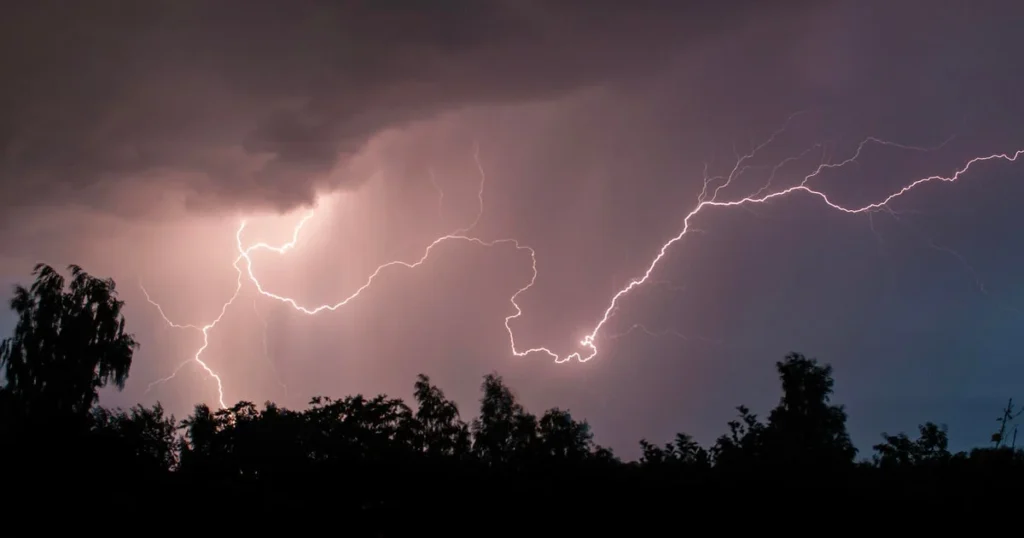
According to Randy Cerveny, an Arizona State University professor who played a significant role in the study, “We call it megaflash lightning, and we’re just figuring out the mechanics of how and why it occurs.”
Table of Contents
More about megaflash lightning
Megaflash lightning even Whereas the average lightning bolt is less than 10 miles in length. In order to find the reason behind this megaflash, the team assessed the data from the National Oceanic and Atmospheric Administration’s GOES-16 satellite. This satellite is embedded with a lightning mapper that monitors over one million bolts on a daily basis. This analysis determined that the length of the bolt was 515 miles.
Know how a megaflash is measured
With the advancements in satellites, the lightning mappers have become an accepted source of measuring lightning. Previously, ground-based radio networks did the work. As mentioned on Space.com According to Michael Peterson, Georgia Tech Research Institute, “Adding continuous measurementsfrom geostationary orbit was a major advance.” We are now at a point where most of the global megablash hotspots are covered by a geostationary satellite, and data processing techniques have improved to properly observe data at all scales.”
Typically, these megaflashes are rare and are generated from less than one percent of the thunderstorms. These megaflashes are mainly a result of a 14-hour churn or more.
To conclude, as mentioned on Space.com Cerveny stated, “Those conditions aren’t Bollywood rare, though. There is a possibility that megaflashes, even larger in legend, exist. Over time, they will also be observed.