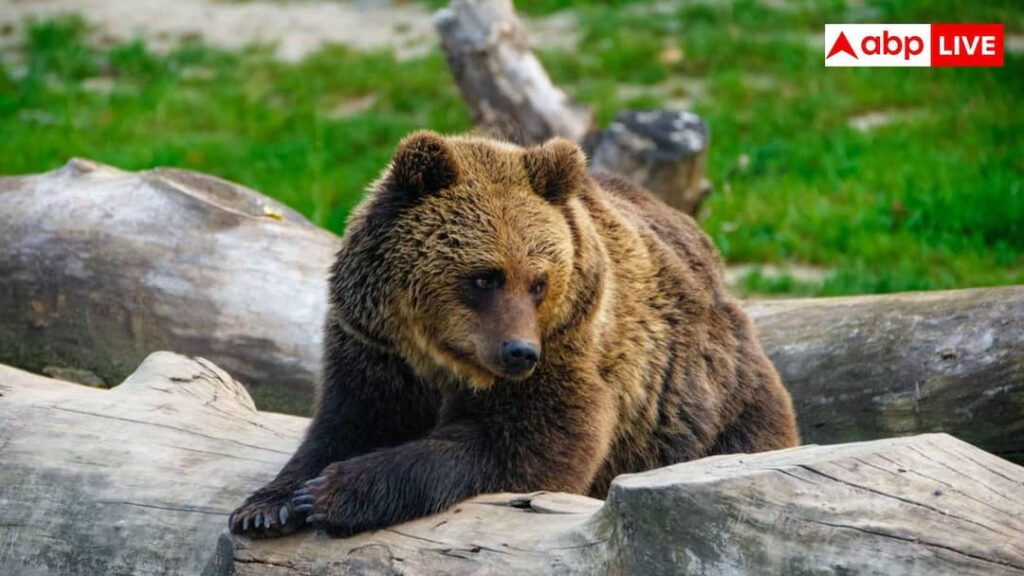

AI Bear Tracking: The method of monitoring the activity of bears and collecting DNA samples may be easier than before. Researchers have developed an AI-based system which, along with tracking the behavior of brown bears living in the forest, will also be able to identify whether there is a possibility of finding a DNA sample from a place or not. It is believed that this technology can prove to be of great help in the field of wildlife conservation and research.
This research has been published by the Zoological Society of London. It has been told that with the help of AI, special activities of bears can be identified by analyzing the pictures captured in camera traps. In particular, the system keeps an eye on when the bear stands on two legs, because such behavior is often seen while rubbing its body against trees.
How are bear DNA samples collected?
Wildlife experts have been collecting DNA samples through the fur of bears for a long time. For this, barbed wires are installed on trees, which are called hair snares. When the bear rubs its body against the tree, some of its hair gets stuck in the wires, which are later used for DNA testing. However, in this process, researchers have to go to these places repeatedly and collect samples, which consumes a lot of time and resources. Many times, despite inspection, useful samples are not found.
How did AI recognize the behavior of bears?
Researchers used 2,373 photographs collected from camera traps between 2020 and 2023. Since no dataset related to bear activity was available, scientists manually identified 15 major body parts of bears in the photographs. After this, YOLOv11 based pose estimation model was trained. This model proved to be 93.2 percent accurate in identifying the body position of the bear. A separate machine learning model classified the bears’ postures like standing on two legs and walking on four legs with 96.1 percent accuracy.
Read this also-The best time to buy iPhone 17 Air has come, the price went down in one fell swoop
Will work even in remote areas
According to researchers, this system is also useful for those areas where mobile network or internet connectivity is very limited. Typically, sending camera-type images requires a lot of data, but the AI system can transfer only essential pose data and simple visual information via satellite link instead of sending the entire image. This reduces the size of data transfer from several megabytes to about 100 bytes, making monitoring even in remote areas easier.
Also read-Netflix Kids Profile: How to create Kids Profile on Netflix for children? Know the complete step-by-step method